
Hiring Guides
How to Check a Florida Contractor License on DBPR Before You Hire
November 25, 2026 · 11 min read
How to Check a Florida Contractor License on DBPR Before You Hire
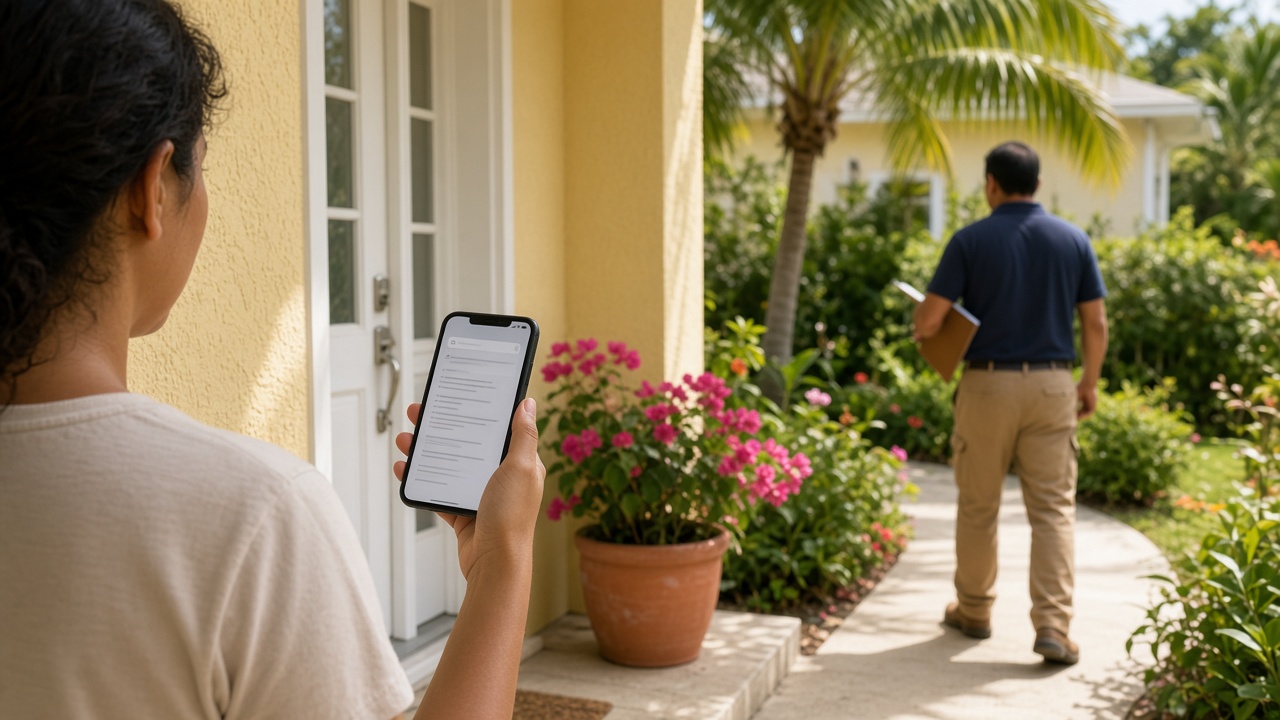
Hiring someone to work on your home is a big decision, and in South Florida, where roofers, AC techs, and remodelers stay busy all year, it's easy to feel rushed. Checking a contractor's license is one of the fastest ways to protect yourself. It's free, it takes about five minutes, and you can do it from your phone before you hand over a deposit.
This guide walks you through the Florida Department of Business and Professional Regulation (DBPR) license search, explains what the codes and statuses mean, and shows what else to check in Miami-Dade.
Why checking a license matters
Florida's DBPR tells homeowners to ask to see a contractor's state-issued license and to verify the number with DBPR before hiring (DBPR brochure). The state says it gets reports of unlicensed work that isn't up to building code, of homeowners paying for jobs that never get finished, and of contractors abandoning projects.
There's a legal angle too. Under section 489.128, Florida Statutes, contracts entered into by an unlicensed contractor are unenforceable in law or in equity by that contractor. Miami-Dade County says contracting without a license is a crime and warns that permit applications are only accepted from contractors with a current certificate of competency and license.
Which jobs need a state-licensed contractor?
DBPR's brochure lists these construction trades as requiring a state license:
- Air-conditioning
- Building contractor
- Electrician
- General contractor
- Home inspection
- Mold-related services
- Plumber
- Pool/spa
- Residential contractor
- Roofer
- Sheet metal
- Solar
And these as not requiring a state license: cabinet installation, carpentry, carpet cleaning, cleaning swimming pools, drywall, flooring, installing above-ground pools, masonry, painting, paving, and tree trimming and removal.
"No state license" doesn't always mean "no license." DBPR tells homeowners to check with the local building department for local license requirements. In Miami-Dade, the county licenses contractors for some work and lets you search its records (see below).
Step-by-step: how to check a license on DBPR
Step 1: Get the exact name and license number
Ask the contractor for their full business name, their own name, and their license number. DBPR notes that licensed contractors must include their license number in all advertising, so check the estimate, website, truck, or business card. A missing number is a warning sign.
Step 2: Open DBPR's "Verify a Licensee" search
Go to MyFloridaLicense.com and choose Verify a Licensee. You'll see four ways to search:
- Search by Name
- Search by License Number
- Search by City or County
- Search by License Type
Searching by license number is the most precise. If you only have a name, try both the person's name and the company name.
Step 3: Match the name
Make sure the name on the license matches the person or business on your contract. If the name on the estimate is a company, ask who the license holder is. A license that belongs to someone else doesn't cover the person in your driveway.
Step 4: Check the license type against your job
Florida construction licenses have codes. The first letter tells you where the contractor can work, according to DBPR's license types page:
- C = Certified. The contractor holds a state certificate of competency and can contract anywhere in Florida.
- R = Registered. The contractor met a local jurisdiction's competency requirements and may contract only in those jurisdictions.
The letters after that show the trade. Common ones for homeowners:
| Code | License type | |---|---| | CG / RG | General contractor | | CB / RB | Building contractor | | CR / RR | Residential contractor | | CC / RC | Roofing contractor | | CA / RA | Air-conditioning contractor (Class A, B, or C) | | CM / RM | Mechanical contractor | | CF / RF | Plumbing contractor | | CP / RP | Pool/spa contractor | | CS / RS | Sheet metal contractor |
Each type has its own limits. For example, DBPR says a residential contractor is limited to one-, two-, or three-family homes of no more than two stories, and a Class B air-conditioning contractor is limited to 25 tons of cooling and 500,000 BTU of heating in any one system.
Electricians have their own board. DBPR's electrical board issues Certified Electrical Contractor (EC) and Registered Electrical Contractor (ER) licenses, along with alarm and specialty licenses (DBPR).
Step 5: Check the status
Look for "Current, Active." DBPR says that status means the license is current and the holder may practice within their scope of work. Any other status is worth a phone call to DBPR before you hire.
Step 6: Look for complaints
DBPR tells homeowners to verify the license number and check for any complaints. Its online services also include an Unlicensed Activity Search, and the Unlicensed Activity Program suggests searching it to see whether a person or business has already been reported. If you can't tell what you're looking at, call DBPR's Customer Contact Center at 850-487-1395.
Extra checks for Miami-Dade homeowners
Search Miami-Dade's contractor records
Miami-Dade runs its own Contractor Inquiry and Complaint Search. Enter the company name or license number to see contractors licensed for work in Miami-Dade and any complaints filed against them. For help, the county lists Contractor Licensing at 786-315-2880.
Confirm insurance
Miami-Dade says licensed contractors must have general liability, property damage, and workers' compensation insurance in effect at all times, and that county Contractor Licensing can tell you whether a contractor has current liability and workers' comp coverage. Ask for proof of insurance before work starts.
Make sure the contractor pulls the permit
The county lists these as warning signs: a contractor who says your job doesn't need a permit, who says it's cheaper for you to pull it yourself, or who lets someone else pull it. Miami-Dade says a licensed contractor in good standing will always obtain their own permit.
Warning signs a contractor may not be licensed
DBPR and Miami-Dade both list red flags. Watch for a contractor who:
- Has no license number on ads, contracts, or business cards
- Shows only an occupational license or business tax number, which isn't a contractor license
- Wants all or most of the money up front, or cash only
- Asks you to make the check out to them personally or to "cash"
- Gives a P.O. box instead of a street address
- Shows up unannounced in an unmarked vehicle, often after a storm
- Won't put the terms in writing
DBPR also notes that being registered as an Inc. or LLC with the Division of Corporations doesn't qualify anyone to act as a contractor.
For roof work after a storm, know that Florida law (s. 489.147) bars contractors from offering gifts, cash, or a waived insurance deductible in exchange for a roof inspection or an insurance claim.
Before you sign: contract and payment basics
A licensed contractor is a great start, not the finish line. A few Florida rules worth knowing:
- Deposits. If a contractor takes more than 10 percent of the contract price as an initial payment on a residential job, they must apply for permits within 30 days and start work within 90 days after permits are issued, unless there's just cause or you agree in writing to longer periods (s. 489.126).
- Lien notice. Direct contracts over $2,500 for work on homes of up to four units must include a construction lien notice, signed and dated by the owner (s. 713.015).
- Recovery fund notice. Residential contracts over $2,500 must include a written statement about the Florida Homeowners' Construction Recovery Fund (s. 489.1425).
Miami-Dade also advises keeping progress payments in line with the work completed and not making the final payment until you have proof of the final inspection.
How to report unlicensed activity
If you think you've hired, or been approached by, an unlicensed contractor, DBPR's Unlicensed Activity Program takes reports:
- Hotline: 1-866-532-1440
- Email: ULA@MyFloridaLicense.com
- Online at MyFloridaLicense.com or through the DBPR mobile app
DBPR says reports can be made anonymously, and it helps to include contracts, proposals, invoices, proof of payment, permits, or liens. Note that DBPR says it does not represent individual consumers and can't give legal advice.
Where TruLocalPro fits
On TruLocalPro, a verified badge means an admin checked a license, general liability insurance, and the business registration. That's a helpful first filter, but licenses can change. Run the DBPR search yourself before you sign or pay.
Get free quotes, then verify
Find pros by trade and city, then use the steps above on each one before you hire:
- General contractors in Miami · all general contractors
- Roofers
- Electricians
- Plumbers
- HVAC
- Top pros in Miami · Fort Lauderdale
- Browse all categories
Get free quotes: describe your project on TruLocalPro Match →
FAQ
How do I check if a contractor is licensed in Florida?
Go to MyFloridaLicense.com and use Verify a Licensee. Search by name, license number, city or county, or license type. Confirm the name matches, the license type covers your job, and the status is current and active.
What does "Current, Active" mean on a DBPR license?
DBPR says it means the license is current and the holder may practice within their scope of work.
What's the difference between a certified and a registered contractor?
A certified contractor (code starting with C) can contract anywhere in Florida. A registered contractor (code starting with R) may contract only in the local jurisdictions where they met competency requirements.
Is a business tax receipt or an LLC the same as a contractor license?
No. DBPR says an occupational license doesn't qualify someone to act as a contractor, and neither does registering an Inc. or LLC.
Do painters and flooring installers need a state license?
DBPR lists painting, flooring, drywall, carpentry, and cabinet installation among trades that don't require a state license. Local rules may still apply, so check with your building department.
How do I report an unlicensed contractor in Florida?
Call 1-866-532-1440, email ULA@MyFloridaLicense.com, file online, or use the DBPR mobile app. Reports can be anonymous.
---
This article is general information for South Florida homeowners, not legal advice. Licensing rules and agency tools change, so confirm details with DBPR, your county or city building department, or a qualified professional.
Are you a licensed contractor in South Florida? Learn about listing on TruLocalPro.
Sources
- Florida DBPR — Verify a Licensee
- Florida DBPR — Construction Industry Licensing Board: License Types
- Florida DBPR — Hire a State-Licensed Contractor (brochure, PDF)
- Florida DBPR — What does a "current, active" licensure status mean?
- Florida DBPR — Electrical board license types
- Florida DBPR — Electrical Contractors FAQs
- Florida DBPR Unlicensed Activity Program — Take Action
- Florida DBPR Unlicensed Activity Program — FAQ
- Miami-Dade County — Warning Signs When Hiring Contractors
- Miami-Dade County — Contractor Inquiry and Complaint Search
- Florida Statutes s. 489.105 (2026)
- Florida Statutes s. 489.128 (2026)
- Florida Statutes s. 489.126 (2026)
- Florida Statutes s. 489.1425 (2026)
- Florida Statutes s. 713.015 (2026)
- Florida Statutes s. 489.147 (2026)
- TruLocalPro homepage — verified badge definition
Get free quotes
Compare homeowners’ options for this kind of work. The links below open the matching trade and city pages.
Get free quotesRelated posts
Questions
How do I check if a contractor is licensed in Florida?
Go to MyFloridaLicense.com and use Verify a Licensee. You can search by name, license number, city or county, or license type. Confirm the name matches the person or company you're hiring, the license type covers your job, and the status shows current and active.
What does 'Current, Active' mean on a DBPR license?
DBPR says a 'current, active' status means the contractor's license is current and the holder may practice within their scope of work.
What's the difference between a certified and a registered contractor?
A certified contractor (code starting with C) can contract anywhere in Florida. A registered contractor (code starting with R) met a local jurisdiction's competency requirements and may contract only in those jurisdictions.
Is a business tax receipt or an LLC the same as a contractor license?
No. DBPR says an occupational license does not qualify someone to act as a contractor, and being registered as an Inc. or LLC with the Division of Corporations doesn't either.
Do painters and flooring installers need a state license?
DBPR lists painting, flooring, drywall, carpentry, cabinet installation, and some other trades as not requiring a state license. Local rules may still apply, so check with your county or city building department.
How do I report an unlicensed contractor in Florida?
Call DBPR's Unlicensed Activity Hotline at 1-866-532-1440, email ULA@MyFloridaLicense.com, file online at MyFloridaLicense.com, or use the DBPR mobile app. Reports can be made anonymously.
Sources
- Florida DBPR — Online Services: Verify a Licensee
- Florida DBPR — Construction Industry Licensing Board: License Types
- Florida DBPR — Protect Your Investment: Hire a State-Licensed Contractor (brochure)
- Florida DBPR — What does a 'current, active' licensure status mean?
- Florida DBPR — What types of licenses does the electrical board offer?
- Florida DBPR — Electrical Contractors FAQs
- Florida DBPR Unlicensed Activity Program — Take Action
- Florida DBPR Unlicensed Activity Program — FAQ
- Miami-Dade County — Warning Signs When Hiring Contractors
- Miami-Dade County — Contractor Inquiry and Complaint Search
- Florida Statutes s. 489.105 (2026) — Definitions
- Florida Statutes s. 489.128 (2026) — Contracts by unlicensed contractors unenforceable
- Florida Statutes s. 489.126 (2026) — Moneys received by contractors
- Florida Statutes s. 489.1425 (2026) — Recovery fund notice
- Florida Statutes s. 713.015 (2026) — Construction lien notice in residential contracts
- Florida Statutes s. 489.147 (2026) — Prohibited property insurance practices
- TruLocalPro — Homepage (verified badge definition)
Prices, licensing rules, and job conditions change. This article is general information for homeowners, not a quote, a permit decision, or a recommendation of a specific business.